
Аппара́т «БепиКоло́мбо» нача́л подлёт к Мерку́рию
The joint ESA-JAXA BepiColombo mission began its Mercury approach phase on August 18, 2026. The spacecraft is scheduled to begin entering orbit around Mercury on November 21.

The joint ESA-JAXA BepiColombo mission began its Mercury approach phase on August 18, 2026. The spacecraft is scheduled to begin entering orbit around Mercury on November 21.
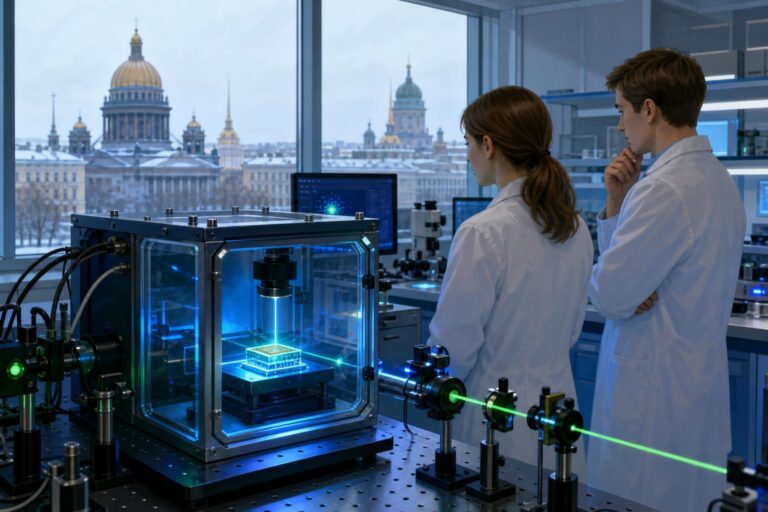
Researchers at ITMO, Skoltech, and HSE have reported an electrically powered perovskite laser diode. The experimental device requires extreme cooling, but it may eventually be useful in optical chips and sensors.

A total solar eclipse will be visible over remote northern Russia late on August 12, 2026. The total phase will cross Taimyr, while other Russian regions will see a partial eclipse.

Franco Vitali won the Phygital Dancing tournament at the Games of the Future in Astana on August 7. He beat Lina 2–1 in the final and received $20,000.

UN experts are meeting in New York from August 5 to 7 to discuss geospatial information, common standards and data-sharing. The data can support city planning, public services, environmental protection and disaster preparation.
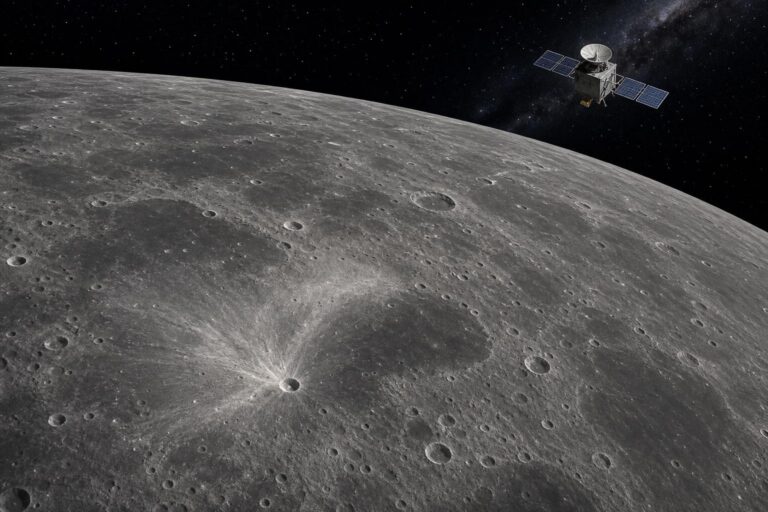
A used SpaceX Falcon 9 rocket stage struck the Moon on August 5, 2026. South Korea’s Danuri probe photographed the impact site and showed a small new crater.

More than 400 school students from over 100 countries are taking part in the International Olympiad in Artificial Intelligence in Astana. The competition includes individual and team tasks in machine learning, data analysis, and programming.

Russia’s Investigative Committee says it has prepared a bill to treat the use of AI and other information technologies as an aggravating circumstance in some criminal cases. The proposal has not yet become law.

Two Russian cosmonauts and a NASA astronaut landed safely in Kazakhstan after spending 241 days in space. Their mission included scientific research, technology testing and two spacewalks.
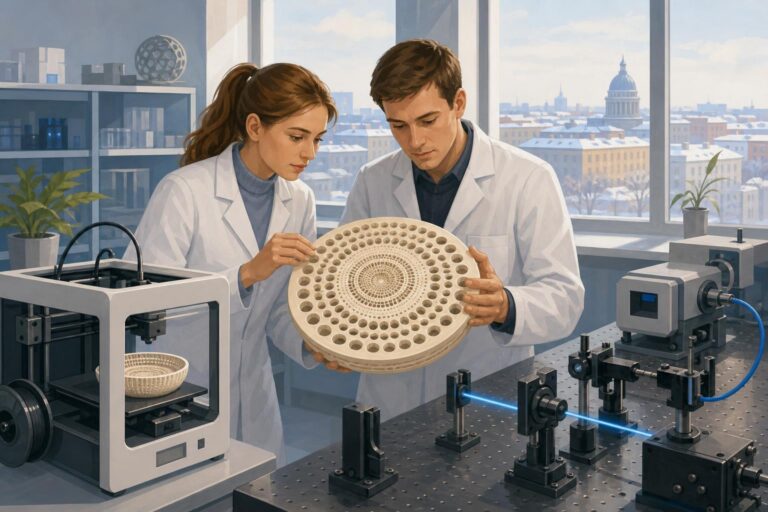
Russian researchers made a polymer model inspired by the intricate shell of a microscopic diatom. The enlarged structure concentrated terahertz waves and may inform the design of future optical components.