
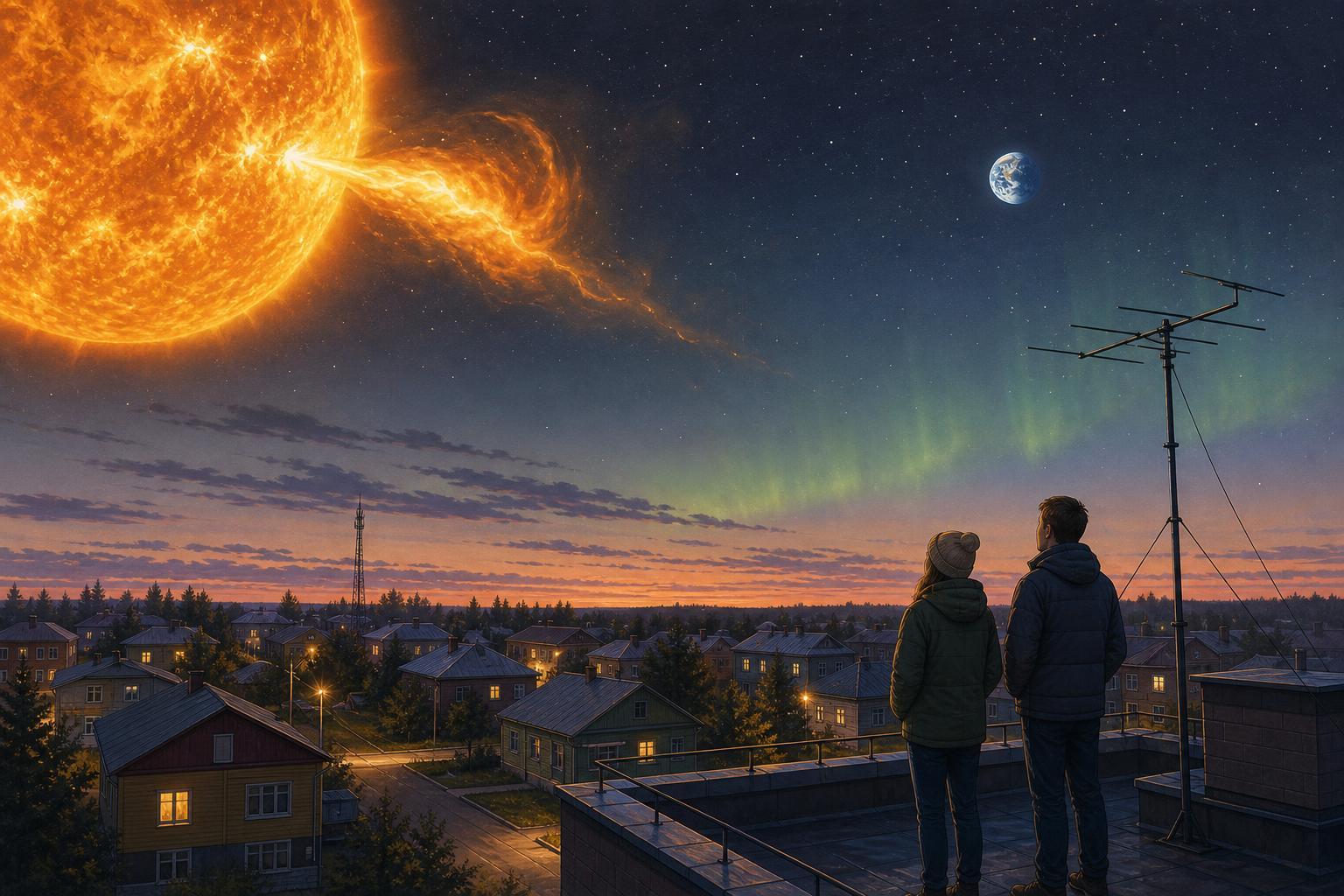
Си́льная вспы́шка на Со́лнце мо́жет вызва́ть магни́тную бу́рю
Listen to the Article
This audio was generated using an AI voice.
25 а́вгуста на Со́лнце произошла́ си́льная вспы́шка кла́сса M6.9. Она́ достигла́ пи́ка в 10:02 по всеми́рному вре́мени. Вспы́шка произошла́ в акти́вной о́бласти 4513. Она́ та́кже вы́звала вы́брос вещества́ с Со́лнца.
Э́тот вы́брос состо́ит из пла́змы — о́чень горя́чего га́за с заря́женными части́цами. По прогно́зу NASA, часть о́блака мо́жет пройти́ ря́дом с Землёй 28 а́вгуста. NOAA ожида́ет в э́тот день магни́тную бу́рю у́ровня G2, то есть уме́ренную.
Во вре́мя тако́й бу́ри иногда́ быва́ют пробле́мы с радиосвя́зью и спу́тниками. Та́кже се́верное сия́ние мо́жет быть ви́дно ю́жнее, чем обы́чно. Но то́чное вре́мя и си́ла бу́ри пока́ неизвестны́. Учёные следя́т за Со́лнцем и меня́ют прогно́з, когда́ получа́ют но́вые да́нные.
Show English Translation
Strong Solar Flare May Cause a Geomagnetic Storm
On August 25, a strong M6.9-class flare occurred on the Sun. It peaked at 10:02 Universal Time. The flare happened in active region 4513. It also caused an ejection of material from the Sun.
This ejection consists of plasma, a very hot gas with charged particles. NASA forecasts that part of the cloud may pass near Earth on August 28. NOAA expects a G2 geomagnetic storm that day, which means a moderate storm.
During such a storm, there can sometimes be problems with radio communication and satellites. The northern lights may also be visible farther south than usual. But the exact time and strength of the storm are still unknown. Scientists are watching the Sun and changing the forecast when they receive new data.
Key Vocabulary
| Russian | Part of speech | English |
|---|---|---|
| вспы́шка | noun | flare |
| дости́чь пи́ка | phrase | to reach a peak |
| акти́вная о́бласть | phrase | active region |
| вы́брос | noun | ejection; release |
| пла́зма | noun | plasma |
| заря́женный | adjective | charged |
| магни́тная бу́ря | phrase | geomagnetic storm |
| радиосвя́зь | noun | radio communication |
| се́верное сия́ние | phrase | northern lights |
Sources
- NOAA Space Weather Prediction Center: Routine Space Environment Product: Forecast Discussion, issued August 26, 2026
- Solar Influences Data Analysis Center, Royal Observatory of Belgium: SIDC Ursigram 60825, issued August 25, 2026
- NASA Community Coordinated Modeling Center: CME Scoreboard prediction for the August 25, 2026 event
This learner article is an original summary based on the sources above. The featured image is an AI-generated editorial illustration.