Зи́мний морско́й лёд в А́рктике сно́ва сокраща́ется
Listen to the Article
This audio was generated using an AI voice.
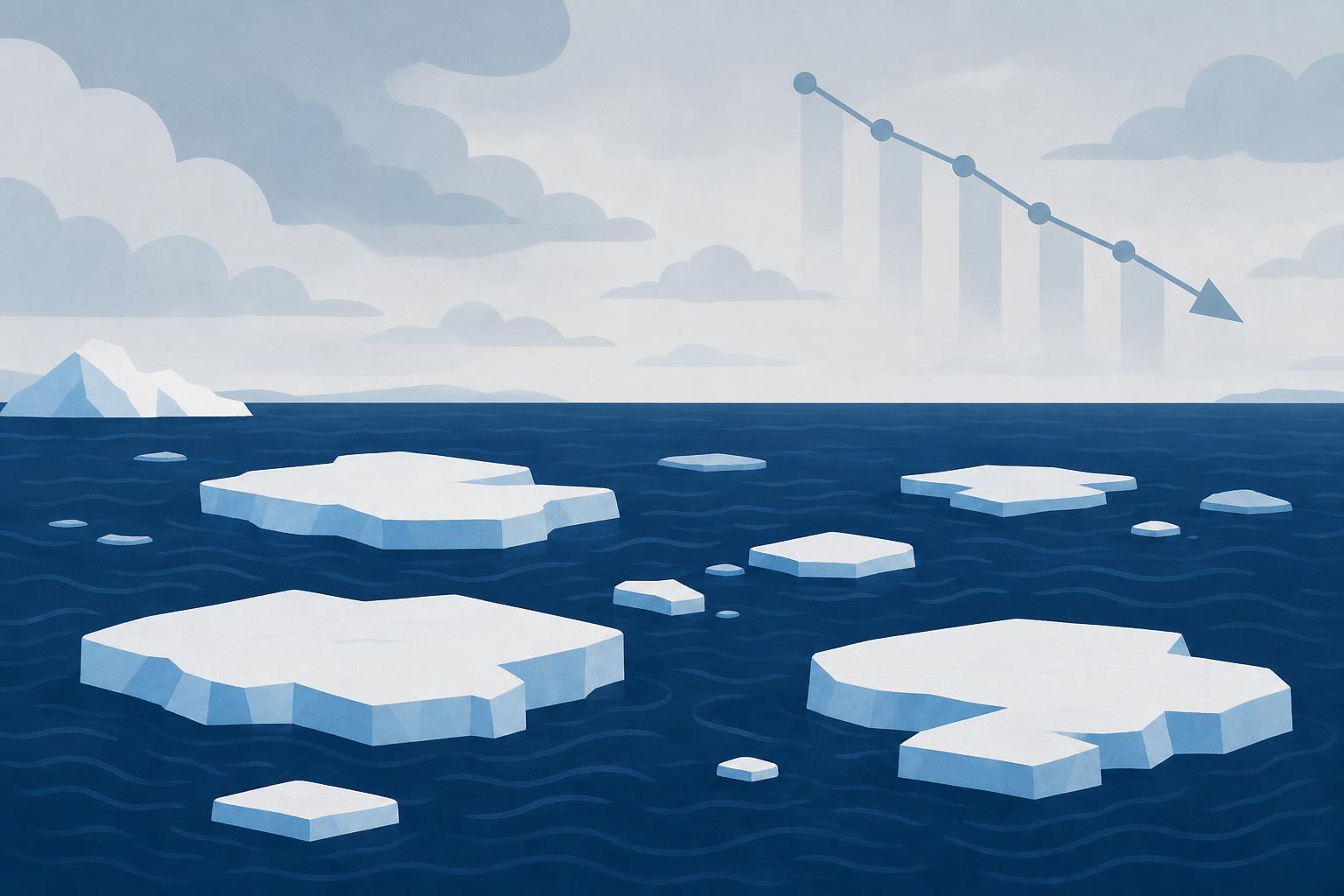
Зи́мний морско́й лёд в А́рктике сно́ва сокраща́ется по́сле вре́менного замедле́ния. Об э́том говори́т иссле́дование, опублико́ванное 20 ию́ля в нау́чном журна́ле PNAS. Учёные изучи́ли спу́тниковые да́нные и сравни́ли их с компью́терными моде́лями кли́мата.
Ра́ньше иссле́дователи заме́тили, что с 2005 по 2024 год сокраще́ние зи́мнего льда заме́длилось. Но в 2025 году́ его́ средняя пло́щадь в конце́ зимы́ упа́ла на 5,8 проце́нта. Э́то ста́ло са́мым кру́пным годовы́м паде́нием за всю исто́рию спу́тниковых наблюде́ний.
В 2026 году́ пло́щадь льда в пери́од ро́ста дости́гла но́вого ми́нимума — 11,3 миллио́на квадра́тных киломе́тров. В конце́ зимы́ льда ста́ло немно́го бо́льше, чем го́дом ра́ньше. Но э́тот результа́т всё равно́ был вторы́м са́мым ни́зким за вре́мя наблюде́ний.
По сло́вам учёных, вре́менное замедле́ние не означа́ло, что измене́ние кли́мата прекрати́лось. Коро́ткие пери́оды ро́ста льда мо́гут скрыва́ть до́лгую тенде́нцию. Моде́ли пока́зывают, что в ближа́йшие го́ды зи́мнего льда, вероя́тно, оста́нется ма́ло. Бы́строе возвраще́ние к у́ровню нача́ла 2020-х годо́в маловероя́тно.
Show English Translation
Arctic Winter Sea Ice Is Declining Again
Arctic winter sea ice is declining again after a temporary slowdown. This is the finding of a study published on July 20 in the scientific journal PNAS. Scientists examined satellite data and compared them with computer climate models.
Researchers had previously noticed that the decline in winter ice slowed between 2005 and 2024. But in 2025, its average extent in late winter fell by 5.8 percent. This was the largest annual drop in the history of satellite observations.
In 2026, ice extent during the growth phase reached a new minimum of 11.3 million square kilometers. In late winter, there was slightly more ice than a year earlier. However, this result was still the second lowest during the observation period.
According to the scientists, the temporary slowdown did not mean that climate change had stopped. Short periods of ice growth can hide a long-term trend. Models show that winter ice will probably remain at a low level in the coming years. A rapid return to the levels of the early 2020s is unlikely.
Key Vocabulary
| Russian | Part of speech | English |
|---|---|---|
| морско́й лёд | noun phrase | sea ice |
| сокраща́ться | verb | to shrink; to decline |
| вре́менное замедле́ние | noun phrase | temporary slowdown |
| исследова́ние | noun | study; research |
| спу́тниковые да́нные | noun phrase | satellite data |
| пло́щадь | noun | area; extent |
| годово́е паде́ние | noun phrase | annual drop |
| наблюде́ние | noun | observation |
| измене́ние кли́мата | noun phrase | climate change |
| тенде́нция | noun | trend |
| маловероя́тно | adverb | unlikely; not very probable |
Sources
- Proceedings of the National Academy of Sciences: Record-low 2025 and 2026 ice extents restore Arctic winter sea-ice decline
- University of Southampton: Arctic winter sea ice returns to significant decline
- National Snow and Ice Data Center: Arctic sea ice record low maximum strikes again
- The Guardian: Slowdown in Arctic ice melt ends after largest winter decline on record
This learner article is an original summary based on the sources above. The featured image is an AI-generated editorial illustration.