
Телескоп «Дже́ймс Уэ́бб» снял о́бласть, где рожда́ются звёзды
The James Webb Space Telescope captured a detailed view of N159, a young region of star formation in the Large Magellanic Cloud. Its glowing gas and dense clouds help astronomers study how stars form.
Listen to the Article
This audio was generated using an AI voice.
Телескоп «Дже́ймс Уэ́бб» снял о́бласть, где рожда́ются звёзды
Косми́ческий телеско́п «Дже́ймс Уэ́бб» получи́л но́вый подро́бный сни́мок о́бласти N159, где рожда́ются звёзды. Она́ нахо́дится в Большо́м Магелла́новом О́блаке — галакти́ке-спу́тнике Мле́чного Пути́. Свет от неё идёт до Земли́ приме́рно 161 ты́сячу лет.
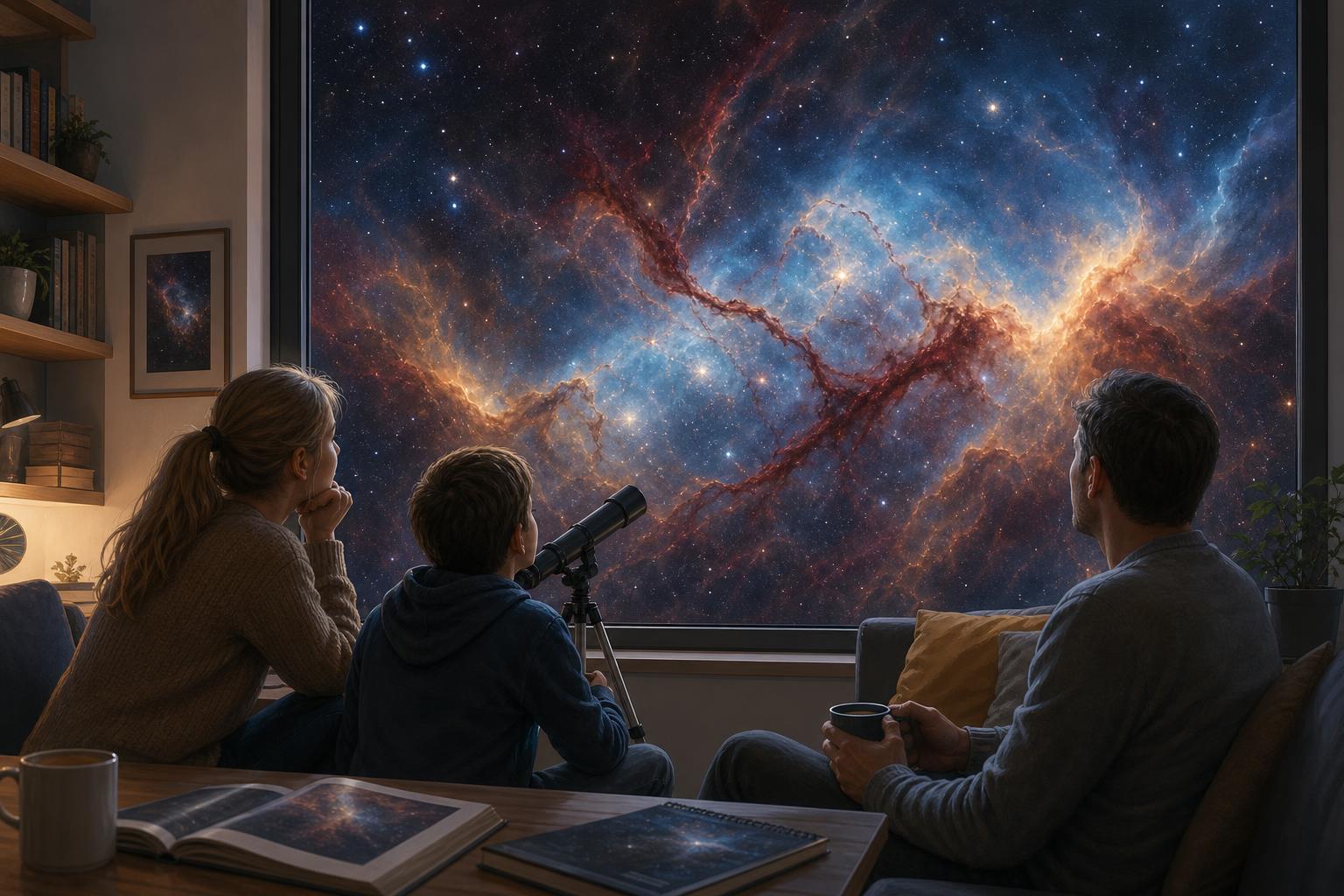
На сни́мке ви́дны облака́ га́за и пы́ли, а внутри́ них — молодые́ звёзды. Яркий голубова́тый свет исхо́дит от водоро́да, нагретого́ излуче́нием го́рячих звёзд. Пло́тные полосы́ га́за, напротив, закрыва́ют часть мо́лодых звёзд от этого́ излуче́ния и звёздных ветро́в.
О́бласть N159 растяну́лась почти́ на 230 световы́х лет. Ей ме́ньше трёх миллио́нов лет, поэтому́ она́ счита́ется одно́й из са́мых молодо́й в Большо́м Магелла́новом О́блаке. Звёзды там ещё формиру́ются из холодного́ водоро́дного га́за.
Астрономы́ изуча́ют такие́ о́бласти, чтобы поня́ть, как появля́ются звёзды. В N159 можно́ наблюда́ть ра́зные ста́дии этого́ процесса́: от сжа́тия га́за до рожде́ния звёзд. Соста́в о́блака отлича́ется от облако́в в Мле́чном Пути́ и напомина́ет усло́вия в ра́нней Вселе́нной.
Show English Translation
James Webb Telescope Captures a Star-Forming Region
The James Webb Space Telescope has taken a new, detailed image of N159, a region where stars are born. It lies in the Large Magellanic Cloud, a satellite galaxy of the Milky Way. Its light takes about 161,000 years to reach Earth.
The image shows clouds of gas and dust, with young stars inside them. The bright blue glow comes from hydrogen heated by radiation from hot stars. Dense bands of gas, in contrast, hide some young stars from this radiation and from stellar winds.
N159 stretches for almost 230 light-years. It is less than three million years old, so it is considered one of the youngest regions in the Large Magellanic Cloud. Stars there are still forming from cold hydrogen gas.
Astronomers study such clouds to understand how stars appear. In N159, they can observe different stages of this process: from gas contracting to the birth of stars. The cloud’s composition differs from that of clouds in the Milky Way and resembles conditions in the early universe.
Key Vocabulary
| Russian | Part of speech | English |
|---|---|---|
| телеско́п | noun | telescope |
| сни́мок | noun | image; photograph |
| рожда́ться | verb | to be born; to form |
| галакти́ка | noun | galaxy |
| излуче́ние | noun | radiation |
| пло́тный | adjective | dense |
| звёздный ве́тер | noun | stellar wind |
| растяну́ться | verb | to stretch; to extend |
| соста́в | noun | composition |
| Вселе́нная | noun | universe |
Sources
- Space.com: Glowing 'cauldron' of new stars | Space photo of the day for Oct. 26, 2026
- ESA/Webb: Stars brewing in a nebulous cauldron
This learner article is an original summary based on the sources above. The featured image is an AI-generated editorial illustration.
Your weekly Russian news roundup
Sign up for the weekly Russian digest. Your email address is processed by Sender to deliver it. You can unsubscribe at any time. Privacy policy.
If the signup form does not appear, open the Russian signup form (opens in a new tab).