
Фи́зики подтверди́ли существова́ние тре́тьего ви́да магнети́зма
Physicists reported experimental evidence of altermagnetism after detecting a distinctive magnetic signal in manganese telluride. The finding could inform future electronics, but practical uses will require more research.
Listen to the Article
This audio was generated using an AI voice.
Фи́зики подтверди́ли существова́ние тре́тьего ви́да магнети́зма
Фи́зики получи́ли но́вые доказа́тельства существова́ния тре́тьего ви́да магнети́зма. Они́ изуча́ли теллури́д ма́рганца — материа́л, кото́рый ра́ньше счита́ли антиферромагне́тным. Результа́ты рабо́ты опубликова́ли 29 октября́ в журна́ле Science.
У обы́чных магни́тов электро́ны создаю́т магни́тное по́ле. В антиферромагне́тиках их спи́ны направле́ны по-ра́зному, поэ́тому магни́тное де́йствие друг дру́га осла́бляют. Альте́рмагнети́зм сочета́ет черты́ обо́их ви́дов: спи́ны в материа́ле череду́ются, но электро́ны могу́т перено́сить информа́цию.
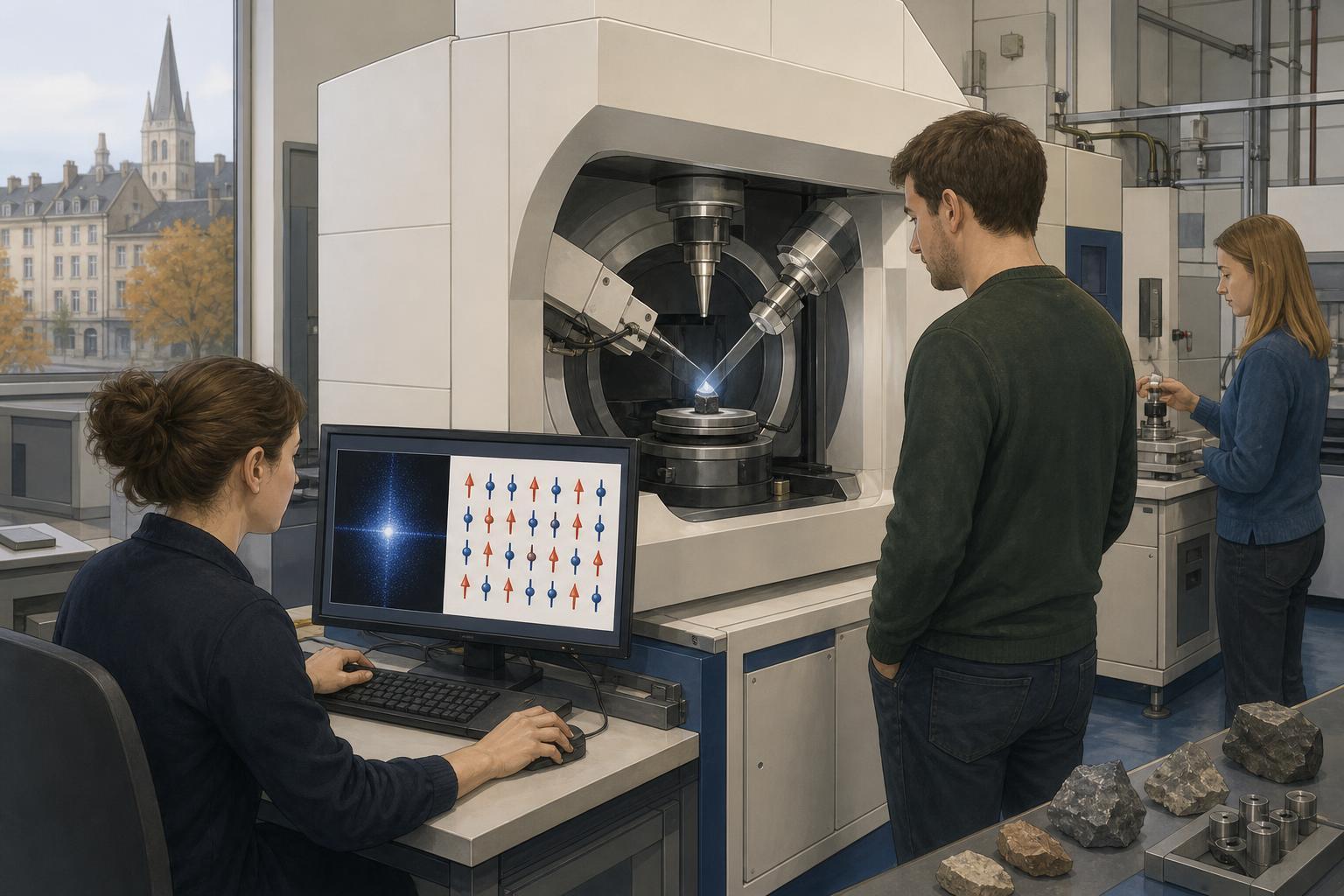
Учёные прове́ли экспери́мент на европе́йском синхротро́не во Фра́нции. Они́ направи́ли на теллури́д ма́рганца рентге́новские лу́чи двух ти́пов и сравни́ли, как материа́л их рассеива́ет. Так иссле́дователи нашли́ осо́бый сигна́л: он показа́л, что строе́ние магне́тных спи́нов име́ет определённую «сторону́» и несимметри́чно. Обы́чный антиферромагне́тик тако́го сигна́ла не да́л бы.
Пе́рвый экспери́мент прошёл в 2024 году́, а в нача́ле 2025 года́ кома́нда повтори́ла измере́ния и получи́ла тот же результа́т. Это укрепи́ло доказа́тельства, но не зна́чит, что но́вая электро́ника появи́тся сра́зу. Учёным ещё предсто́ит научи́ться управлять таки́ми материа́лами. В бу́дущем они́ мо́гут помо́чь создава́ть бы́струю па́мять и устро́йства, кото́рые тра́тят ме́ньше эне́ргии.
Show English Translation
Physicists Confirm a Third Type of Magnetism
Physicists have found new evidence for the existence of a third type of magnetism. They studied manganese telluride, a material previously considered antiferromagnetic. The results were published in the journal Science on October 29.
In ordinary magnets, electrons create a magnetic field. In antiferromagnets, their spins point in different directions, so their magnetic effects weaken one another. Altermagnetism combines features of both types: spins in the material alternate, but electrons can carry information.
The scientists conducted the experiment at a European synchrotron in France. They directed two types of X-rays at manganese telluride and compared how the material scattered them. This helped the researchers find a distinctive signal: it showed that the arrangement of the magnetic spins has a particular handedness and is asymmetric. An ordinary antiferromagnet would not produce this signal.
The first experiment took place in 2024, and the team repeated the measurements in early 2025, getting the same result. This strengthened the evidence, but it does not mean new electronics will appear immediately. Scientists still need to learn how to control such materials. In the future, they could help create fast memory and devices that use less energy.
Key Vocabulary
| Russian | Part of speech | English |
|---|---|---|
| доказа́тельство | noun | evidence; proof |
| теллури́д ма́рганца | noun | manganese telluride |
| спи́н | noun | spin |
| чередова́ться | verb | to alternate |
| рентге́новский луч | noun | X-ray |
| рассе́ивать | verb | to scatter |
| си́гнал | noun | signal |
| строе́ние | noun | structure; arrangement |
| измере́ние | noun | measurement |
| управля́ть | verb | to control |
Sources
- SLAC National Accelerator Laboratory: SLAC researchers find proof of altermagnetism, a new magnetic phase
- Science: Chiral altermagnon in MnTe
This learner article is an original summary based on the sources above. The featured image is an AI-generated editorial illustration.
Your weekly Russian news roundup
Sign up for the weekly Russian digest. Your email address is processed by Sender to deliver it. You can unsubscribe at any time. Privacy policy.
If the signup form does not appear, open the Russian signup form (opens in a new tab).