
Учёные из «Си́риуса» получи́ли магни́тную жи́дкость для ме́дицины
Listen to the Article
This audio was generated using an AI voice.
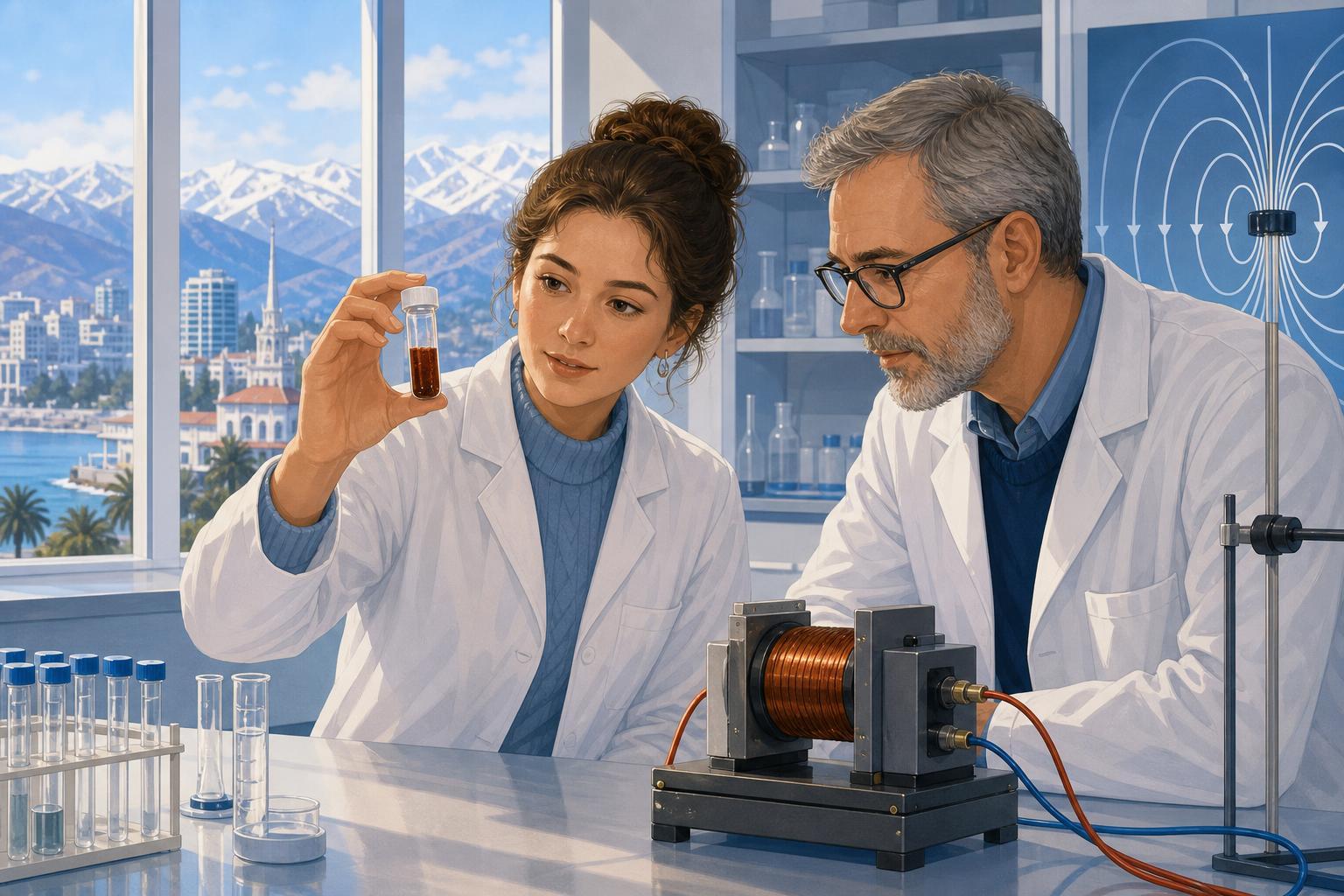
Учёные Нау́чно-технологи́ческого университе́та «Си́риус» вме́сте с колле́гами из Москвы́ и Ско́пье получи́ли но́вую магни́тную жи́дкость. Она́ сде́лана на осно́ве воды́ и стаби́льных наночасти́ц из окси́дов ко́бальта и желе́за. Результа́ты рабо́ты вы́шли 15 сентября́ в журна́ле Surfaces and Interfaces.
Под де́йствием магни́тного по́ля жи́дкость бы́стро нагрева́ется. Поэ́тому в бу́дущем её мо́жно бу́дет изуча́ть для то́чечного нагре́ва ра́ковых кле́ток. Таки́е части́цы теорети́чески мо́жно направля́ть к о́пухоли, а зате́м нагрева́ть. Э́то мо́жет уменьши́ть вре́д для здоро́вых тка́ней.
Обы́чно магни́тные наночасти́цы слипа́ются и теря́ют свои́ свой́ства. Чтобы́ э́того избе́жать, учёные ча́сто испо́льзуют полиме́ры, кисло́ты или други́е доба́вки. Но но́вая жи́дкость не нужда́ется в таки́х веще́ствах. Иссле́дователи подобра́ли соотноше́ние ко́бальта и желе́за, а та́кже примени́ли ультразву́к.
Наночасти́цы с бо́льшим коли́чеством ко́бальта та́кже ускоря́ют окисли́тельные реа́кции с перокси́дом водоро́да. Поэ́тому материа́л мо́жет пригоди́ться для лаборато́рных тестов и биосе́нсоров. Одна́ко рабо́та пока́ на ра́ннем эта́пе: пе́ред испыта́ниями на лю́дях ну́жны дополни́тельные прове́рки безопа́сности и эффе́кта.
Show English Translation
Sirius Scientists Develop Magnetic Fluid for Medicine
Scientists at the Sirius University of Science and Technology, together with colleagues from Moscow and Skopje, have produced a new magnetic fluid. It is made from water and stable nanoparticles of cobalt and iron oxides. The results were published on September 15 in the journal Surfaces and Interfaces.
The fluid heats up quickly under a magnetic field. Therefore, it may be studied in the future for targeted heating of cancer cells. In theory, such particles can be directed to a tumour and then heated. This could reduce harm to healthy tissues.
Magnetic nanoparticles usually clump together and lose their properties. To prevent this, scientists often use polymers, acids, or other additives. But the new fluid does not need such substances. The researchers selected a ratio of cobalt and iron and also used ultrasound.
Nanoparticles with more cobalt also speed up oxidation reactions involving hydrogen peroxide. The material may therefore be useful for laboratory tests and biosensors. However, the work is still at an early stage: further checks of safety and effectiveness are needed before tests in people.
Key Vocabulary
| Russian | Part of speech | English |
|---|---|---|
| магни́тная жи́дкость | noun phrase | magnetic fluid |
| наночасти́ца | noun | nanoparticle |
| окси́д | noun | oxide |
| магни́тное по́ле | noun phrase | magnetic field |
| нагрéв | noun | heating |
| опу́холь | noun | tumour |
| тка́нь | noun | tissue |
| слипáться | verb | to clump together |
| доба́вка | noun | additive |
| соотноше́ние | noun | ratio |
| окисли́тельная реа́кция | noun phrase | oxidation reaction |
| биосе́нсор | noun | biosensor |
Sources
- Sirius University of Science and Technology: Химики создали магнитную жидкость для медицинской диагностики и лечения опухолей
- Surfaces and Interfaces (Elsevier): Pristine stable cobalt ferrous ferrite hydrosols with extremely high isoelectric point
This learner article is an original summary based on the sources above. The featured image is an AI-generated editorial illustration.