
На Луне́ обнаружили но́вый большо́й кра́тер
Listen to the Article
This audio was generated using an AI voice.
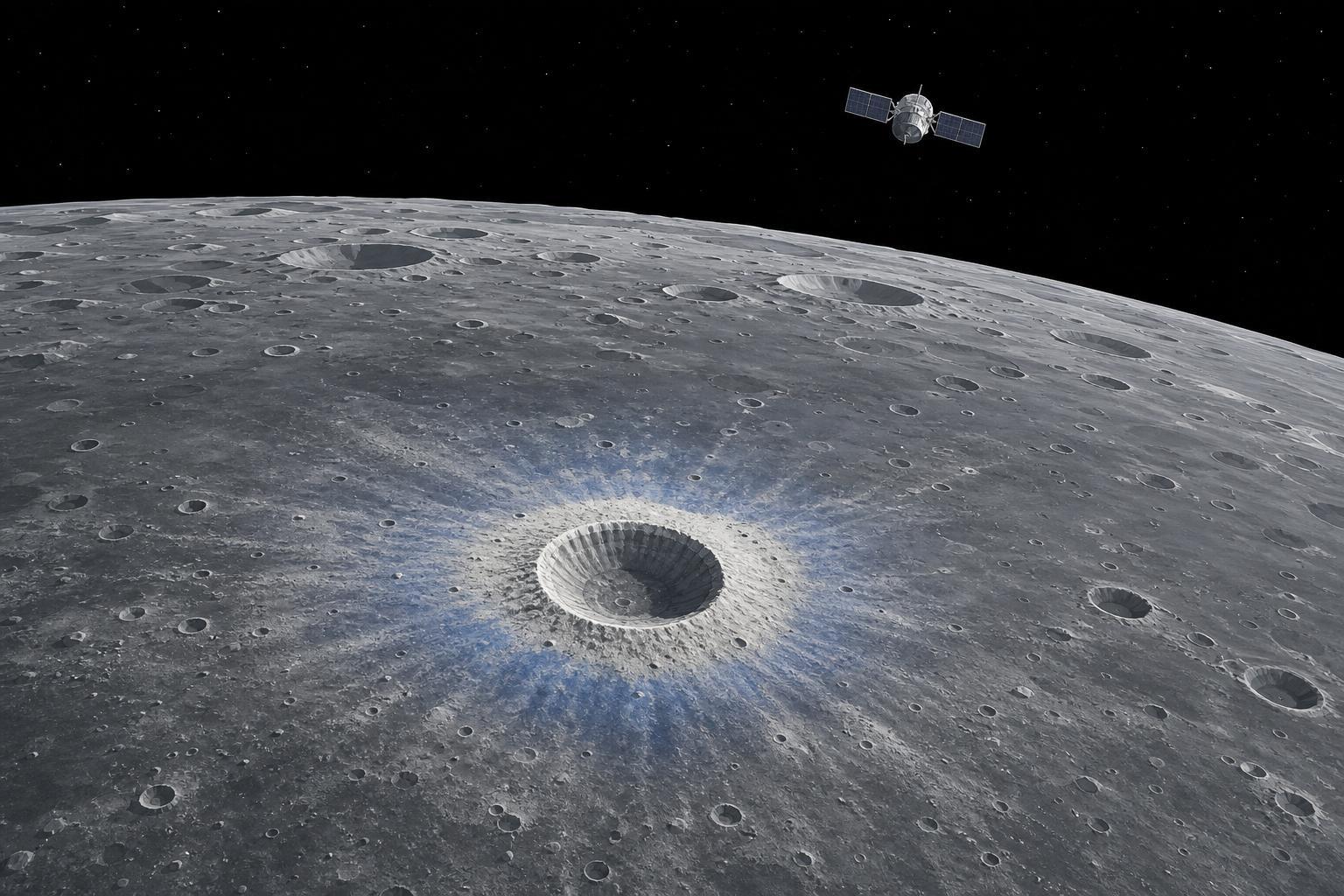
Учёные обнару́жили на Луне́ но́вый кра́тер диа́метром 222 ме́тра. Он появи́лся на ви́димой стороне́ Луны́ ме́жду 11 апре́ля и 22 ма́я 2024 го́да. Кра́тер назва́ли Макге́тчин — в честь америка́нского иссле́дователя Луны́ То́маса Макге́тчина.
По оце́нке учёных, в пове́рхность Луны́ вре́зался фрагме́нт астеро́ида и́ли коме́ты. Его разме́р мог быть как у зда́ния высото́й от трёх до шести этаже́й. Уда́ры тако́й си́лы на Луне́ случа́ются приме́рно раз в 132 го́да.
Откры́тие сде́лали с по́мощью косми́ческого аппара́та NASA Lunar Reconnaissance Orbiter. 24 октября́ 2025 го́да специа́лист Ро́берт Ва́гнер заме́тил необы́чное све́тлое пятно́ на ка́рте Луны́. Он сравни́л но́вые и ста́рые снимки́, а зате́м учёные получи́ли бо́лее по́дробные изображе́ния уча́стка.
Уда́р измени́л пове́рхность далеко́ за преде́лами кра́тера. Вокру́г него́ образова́лась холо́дная зо́на ширино́й о́коло семи́ киломе́тров: но́чью она́ приме́рно на де́вять гра́дусов Це́льсия холо́днее окру́жающей ме́стности. Эти да́нные помо́гут рассчита́ть ри́ски для бу́дущих лунных баз и лунохо́дов.
Show English Translation
Scientists Discover a Large New Crater on the Moon
Scientists have discovered a new crater on the Moon that is 222 meters in diameter. It formed on the Moon’s near side between April 11 and May 22, 2024. The crater was named McGetchin after American lunar scientist Thomas McGetchin.
Scientists estimate that a fragment of an asteroid or comet crashed into the Moon’s surface. It may have been the size of a building three to six stories high. Impacts of this strength occur on the Moon about once every 132 years.
The discovery was made with help from NASA’s Lunar Reconnaissance Orbiter spacecraft. On October 24, 2025, specialist Robert Wagner noticed an unusual bright spot on a map of the Moon. He compared new and old images, and scientists then obtained more detailed images of the area.
The impact changed the surface far beyond the crater itself. A cold area about seven kilometers wide formed around it: at night, it is about nine degrees Celsius colder than the surrounding area. These data will help scientists calculate risks for future lunar bases and rovers.
Key Vocabulary
| Russian | Part of speech | English |
|---|---|---|
| кра́тер | noun | crater |
| диа́метр | noun | diameter |
| исслéдователь | noun | researcher; scientist |
| по оце́нке | phrase | according to an estimate |
| фрагме́нт | noun | fragment |
| астеро́ид | noun | asteroid |
| вреза́ться | verb | to crash into |
| снимо́к | noun | image; photograph |
| уча́сток | noun | area; site |
| холо́дная зо́на | noun phrase | cold area |
| рассчита́ть | verb | to calculate |
| лунохо́д | noun | lunar rover |
Sources
- NASA Science: NASA’s Moon Orbiter Spots New, ‘Once-in-Century’ Moon Crater
- Universities Space Research Association: NASA’s Lunar Reconnaissance Orbiter Discovers a New 222-m Diameter Lunar Crater
- Associated Press: NASA spacecraft discovers a huge new crater on the moon
This learner article is an original summary based on the sources above. The featured image is an AI-generated editorial illustration.