
В древнем курга́не в Туве́ нашли семена́ конопли́
A study of the Tunnug-1 burial mound in Tuva found cannabis seeds and chemical traces in preserved hair. Researchers say the findings may point to ancient use, but experts disagree about whether the hair evidence proves it.
Listen to the Article
This audio was generated using an AI voice.
В древнем курга́не в Туве́ нашли семена́ конопли́
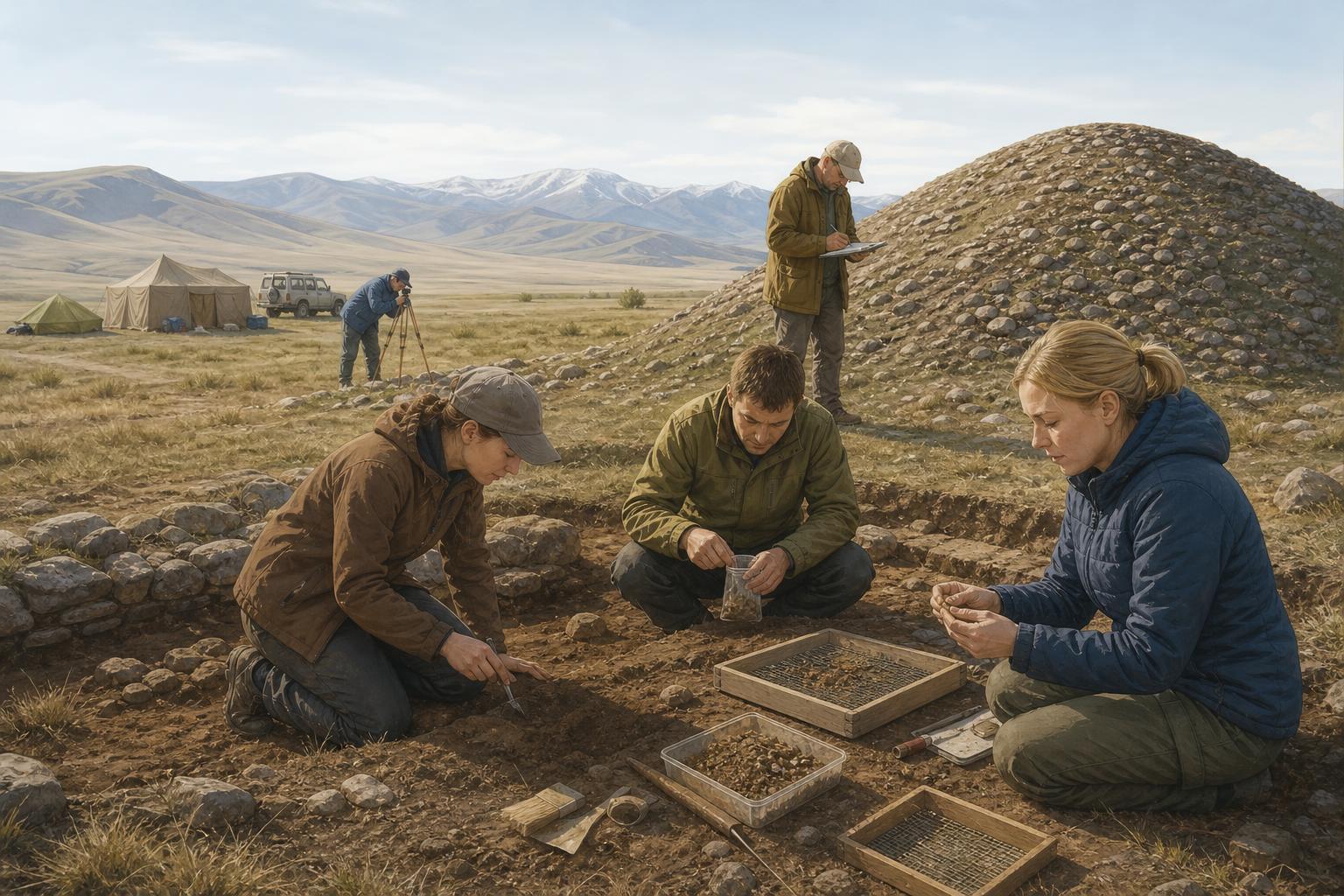
В курга́не Туннуг-1 в Туве́ архео́логи нашли о́коло ты́сячи семя́н конопли́. Там же сохрани́лись волосы́ похоро́ненных люде́й. Курга́н отно́сится к нача́лу восьмо́го ве́ка до на́шей э́ры. Результа́ты междунаро́дного иссле́дования опубликова́ли 5 ноября́ в журна́ле Science.
Учёные прове́рили образцы́ волос и нашли́ в не́которых из них хими́ческие сле́ды, кото́рые свя́заны с коноплёй. Авторы́ статьи счита́ют, что лю́ди могли́ употребля́ть расте́ние из-за его́ де́йствия на созна́ние. Они́ также́ предполага́ют, что семена́ могли́ быть ча́стью погреба́льного риту́ала.
Одни́х семя́н в моги́ле недоста́точно, что́бы доказа́ть тако́е употребле́ние: коноплю́ испо́льзовали и для получе́ния ма́сла и волокна́. Кро́ме того́, не все́ учёные согла́сны с вы́водом по проба́м волос. Они́ допуска́ют, что сле́ды могли́ попасть на волосы́ уже́ в моги́ле, где лежа́ли семена́.
Иссле́дование не показа́ло, как вещества́ попа́ли в о́рганизм: при вдыха́нии и́ли че́рез еду́. Поэ́тому нельзя́ то́чно сказа́ть, как испо́льзовали коноплю́. Учёные счита́ют, что нахо́дка даёт ре́дкую возмо́жность изучи́ть расте́ние и челове́ческие останки́ из одного́ древнего захороне́ния.
Show English Translation
Cannabis Seeds Found in an Ancient Burial Mound in Tuva
At the Tunnug-1 burial mound in Tuva, archaeologists found about a thousand cannabis seeds. Hair from people buried there was also preserved. The mound dates to the early eighth century BCE. The international study’s findings were published in the journal Science on November 5.
Researchers tested hair samples and found chemical traces linked to cannabis in some of them. The authors think people may have used the plant for its effects on the mind. They also suggest that the seeds may have been part of a burial ritual.
The seeds alone are not enough to prove this kind of use: cannabis was also used to produce oil and fibre. In addition, not all researchers agree with the conclusion drawn from the hair samples. They think the traces may have reached the hair after burial, while the seeds were lying nearby.
The study did not show how the substances entered the body: through inhalation or food. It is therefore not possible to say exactly how the cannabis was used. Researchers say the find offers a rare chance to study a plant and human remains from the same ancient burial.
Key Vocabulary
| Russian | Part of speech | English |
|---|---|---|
| курга́н | noun | burial mound |
| семя́ | noun | seed |
| волосы́ | noun | hair |
| образе́ц | noun | sample |
| следы́ | noun | traces |
| созна́ние | noun | mind; consciousness |
| погреба́льный риту́ал | phrase | burial ritual |
| волокно́ | noun | fibre |
| вдыха́ние | noun | inhalation |
| захороне́ние | noun | burial |
Sources
- Associated Press: Seeds, preserved hair in tomb point to oldest signs of cannabis high 2,800 years ago, study suggests
- University of Bern: Cannabis was used as an intoxicant as early as 2,800 years ago
- Archaeology Magazine: Cannabis Identified in Siberian Scythian Tomb
This learner article is an original summary based on the sources above. The featured image is an AI-generated editorial illustration.
Your weekly Russian news roundup
Sign up for the weekly Russian digest. Your email address is processed by Sender to deliver it. You can unsubscribe at any time. Privacy policy.
If the signup form does not appear, open the Russian signup form (opens in a new tab).